House painters · Ottawa, Ontario · 12 years of experience
Painters in Ottawa who prep like it shows.
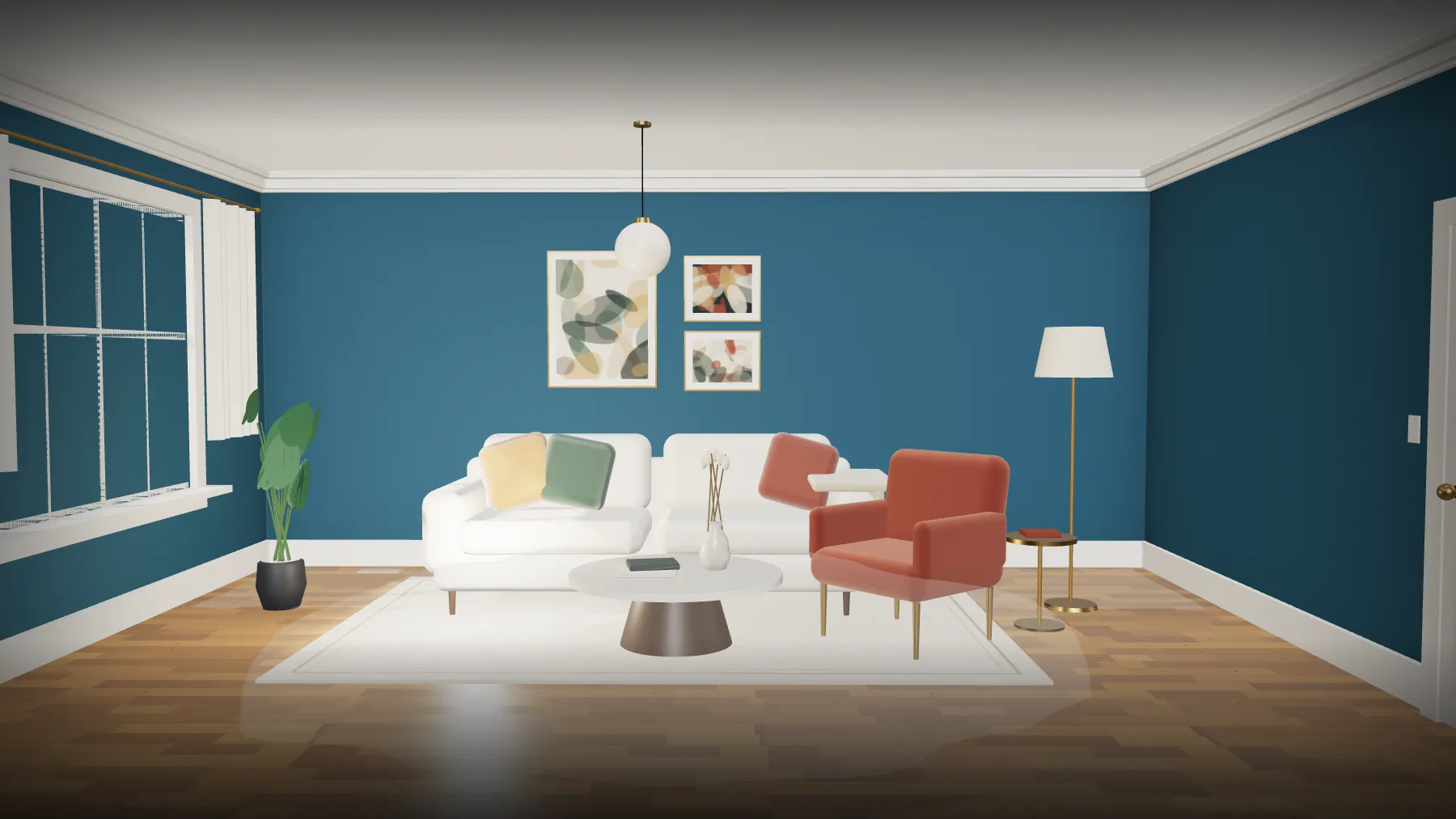
Good prep always shows. Pick a colour below, then scroll: this room gets covered, patched, taped, cut in and rolled the way we do it in your home.
Scroll to paint the room
On the wallsCanal Blue
- What we paint
- Homes, condos, offices and shops across Ottawa
- Inside and out
- Walls, ceilings, trim, cabinets, siding, decks
- Before the paint
- Drywall repair, ceiling texture and wallpaper
- Fastest answer
- 613-851-7831
A painting company for Ottawa homes
Paint is the last ten percent. The rest is prep.
Anyone can roll colour onto a wall. A high quality paint job still looks sharp in eight years. A rushed painting job looks tired in two. The difference is everything that happens before the can is opened. We move and cover the furniture. We fill every dent and crack. We sand glossy trim so new paint can grip. We pick the right primer for the water stain, and we cut the edges patiently.
The Ottawa Painter is a painting company built around that order of work, with 12 years of experience behind it. Are you comparing house painters in Ottawa? Do you want a painting company in Ottawa that repairs the walls first? This page shows how we work. Rooms that professionals painted well share one thing: careful, start-to-finish prep. Most painting projects go wrong in the preparation, so that is where our professionals spend their time. Clear customer service matters as well: one contact, a written scope and a call back when we say. Every job starts with a free estimate. That is where peace of mind comes from. We handle interior and exterior painting, and the prep work comes first on both. Even an excellent job with the roller cannot hide a dent. A great job on the trim starts with the caulking, and careful painters ensure every patch is primed first. We are house painters first: living rooms, bedrooms, kitchens, stairwells, front doors, siding and decks. We also paint offices, shops and condo common areas. Our painting services cover the jobs that come before painting too: patching drywall, smoothing a textured ceiling and stripping old wallpaper.
This page is long on purpose. It explains how house painting should run and what Ottawa's older houses and hard winters change. It also helps you choose colour and sheen with confidence. Six tools sit along the way, and each one is yours to play with. The colour you pick in the room above follows you down the page, and into your quote request if you send one.
Painting services in Ottawa
Eight services, one standard of prep.
Each service has its own page with the full method, the products that suit it and the questions people ask most. Start with the one that matches your project.
Interior painting
Walls, ceilings, trim and doors, with the furniture covered and every hole filled first.
Interior painting in Ottawa →Exterior painting
Siding, brick, front doors, decks and fences, scraped, primed and coated for the Ottawa climate.
Exterior painting in Ottawa →Cabinet painting
Kitchen and bathroom cabinets degreased, primed and sprayed with a hard-curing enamel.
Cabinet painting in Ottawa →Commercial painting
Offices, shops, restaurants and condo common areas, scheduled around your opening hours.
Commercial painting in Ottawa →Drywall repair
Holes, cracks, water stains and failed tape rebuilt so the patch cannot be found.
Drywall repair in Ottawa →Popcorn ceiling removal
Textured ceilings tested, taken down or skimmed over, and finished flat and smooth.
Popcorn ceiling removal in Ottawa →Wallpaper installation
Feature walls and full rooms hung straight, with old paper stripped and walls prepared.
Wallpaper installation in Ottawa →Ceiling repair
Cracks, water stains, sagging board and failed tape repaired and blended into the ceiling.
Ceiling repair in Ottawa →Explore a finished room
Tap anything in the room.
Every part of a painted room is done a different way. Tap a point to see how.
01 / 05
The line at the ceiling
Cut in by brush, in one steady pass. A straight line here is the first thing people notice, even when they cannot say why.
Interior painting in Ottawa02 / 05
Window casing
Trim gets a harder enamel than the walls, in a satin or semi-gloss, because it is the part hands and vacuums hit.
03 / 05
Where the patch was
An old repair used to flash through the paint here. It was sanded flat, primed and painted with the rest of the wall, so it cannot be found.
Drywall repair in Ottawa04 / 05
The wall itself
Two full coats over filled and primed nail holes. In side light a wall shows every dent, so the filling is done with a work light.
05 / 05
Baseboards
Caulked to the wall first, so the shadow gap disappears, then painted last for a clean bottom edge.
A photo-realistic render of a typical Ottawa living room.
Before and after
Drag the line.
Walls, cabinets, siding and ceilings, before and after. Drag the line or tap a tab.
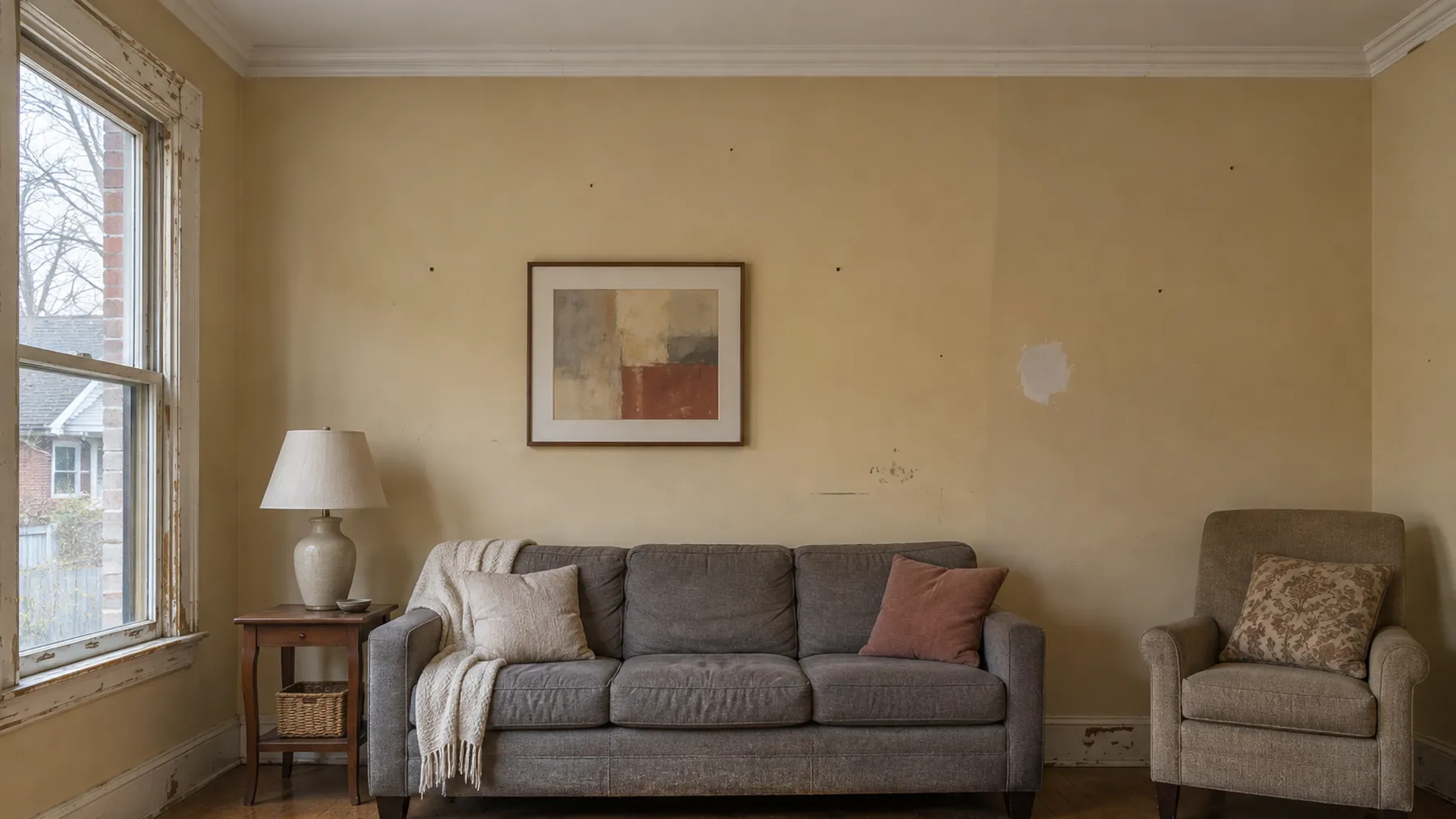
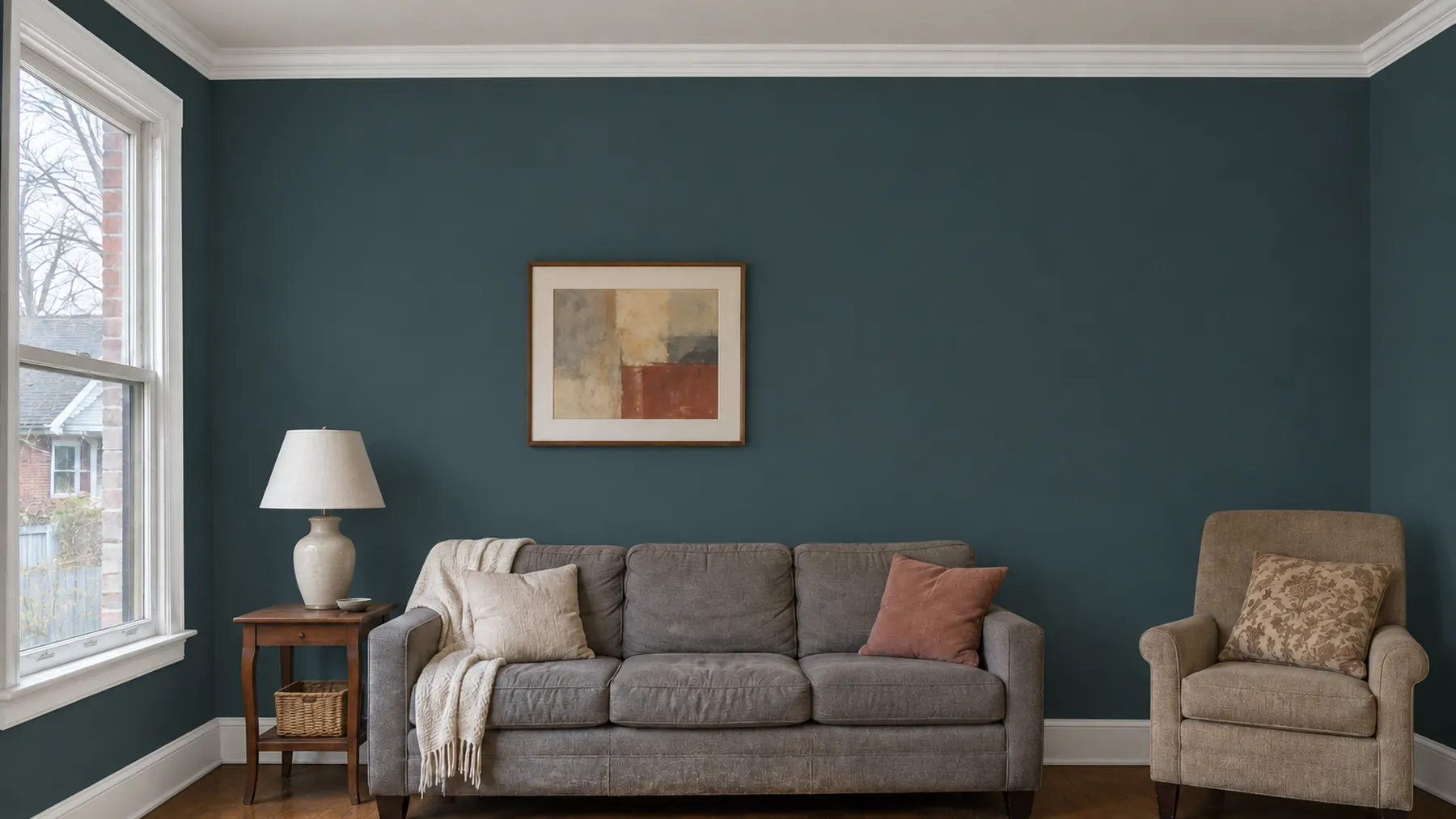
Same room, same light. The colour is the obvious change; the filled holes, the primed patches and the straight lines at the trim are what make it look finished.
Interior painting in OttawaPhoto-realistic renders for comparison, not finished customer projects.
The colour lab
Six tools for choosing well.
Most paint regrets come from three things. The colour looked different on the chip. The sheen shows every flaw. The paint ran out with one wall left. These tools deal with all three, and a few more.
The same paint, in four different rooms.
A colour is never only the colour on the chip. You see that pigment under whatever light your room gets. Choose which way the window faces and the time of day, and watch your swatch shift.
Window faces TimeHow much paint does this room need?
Enter the room in feet. The calculator subtracts doors and windows, allows for the surface and the number of coats, and rounds up to whole cans.
Matte hides. Gloss scrubs. Pick the room.
Sheen is how much light the dry paint reflects. More shine means a harder, more washable film, and it also means every dent and roller mark shows. The right answer depends on the room.
Think rolling a wall is easy? Try it.
Drag across the wall to roll on your colour. Press "Check my work" when you finish. Painters call missed spots holidays, and thin patches that show the old colour through are the reason a second coat exists.
Tip from the trade: work in a W, then fill it in, and overlap every pass by about a third.
What is under the paint in a house your age?
The year a home was built tells a painter what to expect. It hints at the wall material and the old coatings. It also flags two hazards to check before any sanding or scraping.
This is a guide, based on Health Canada's advice on lead paint and asbestos. Testing is the only way to know.
One colour is a wall. Five is a room.
Designers often split a room 60-30-10. The main colour covers the walls. A second colour suits trim, large furniture or an accent wall. A small, bold third finishes it. Choose a mood and the builder works a full scheme out from your wall colour.
How a paint job runs
Eight steps, in this order.
The room at the top of this page shows the short version. Here is the whole thing, the way professional painters in Ottawa should run an interior job.
Walk the job and write it down
Every surface is looked at in good light: walls, ceilings, trim, doors, closets. Stains, cracks, peeling areas and glossy old finishes are noted, because each one changes the prep. The written scope lists which surfaces are painted, how many coats, which products and sheens, and who moves what.
Protect the house
Furniture goes to the centre of the room and under clean drop cloths. Floors are covered wall to wall along the work area. Switch plates, vent covers and hardware come off instead of being painted around, and anything that cannot move is wrapped.
Wash what needs washing
Paint does not stick to grease, soap film or dust. Kitchen walls near the stove, bathroom walls, handprints around switches and the tops of baseboards are cleaned and left to dry.
Repair the surface
Nail holes and dents are filled, popped screws are reset, cracks are opened and taped where needed, and old drips and ridges are scraped. Bigger damage is a separate job: see drywall repair in Ottawa for how holes and water damage are rebuilt so the patch disappears.
Sand and dust
Patches are sanded flush and feathered into the wall. Glossy trim and doors are scuff-sanded so the new coat has something to grip. Then everything is vacuumed and wiped, because dust left on a wall ends up in the paint.
Prime where primer earns its place
Fresh filler, bare drywall and bare wood are spot-primed so they do not flash through the finish as dull patches. Water stains, smoke, marker and wood knots get a stain-blocking primer. A strong colour change may get a tinted primer to save a coat.
Cut in, then roll, twice
Edges are brushed, then walls are rolled from the top down while the cut line is still wet, so brush and roller textures blend. The first coat dries for the time on the label. Then we check the wall with a light held flat against it, touch it up and coat it again.
Put the room back
Tape comes off cleanly, plates and hardware go back on, floors are vacuumed, and furniture returns to where it was. You walk the room with the painter in daylight before anything is called finished. We label the leftover paint by room for future touch-ups.
Painting in Ottawa, specifically
What this city does to paint.
Ottawa has old houses, cold dry winters, humid summers and a short outdoor season. Each of those appears in a paint job, and a local painting contractor should plan for them.
Lead in old coatings
Health Canada's advice is plain: a home built before 1960 probably contains lead-based paint. A home built between 1960 and 1990 may have it on the exterior, with smaller amounts possible inside.
Sound lead paint under newer coats is usually left alone and painted over. The danger is dust from sanding or scraping. In an older Ottawa home, peeling paint is tested first and the prep method changes if lead is found.
Asbestos in textured ceilings
Builders often used asbestos before 1990. That comes from Health Canada. Sprayed ceiling texture is one of the places it turns up.
That is why a textured ceiling in an older home is sampled and lab-tested before anyone scrapes it. For the test and your options, see popcorn ceiling removal in Ottawa.
A short exterior season
Exterior paint needs the surface, and not only the air, to stay above the minimum temperature on the label while it cures. It also needs dry weather, so exterior painting has a season. In Ottawa that makes late spring to early fall the working season.
Winter is hard on the result too. Freeze and thaw pull joints in wood apart, and south and west walls take the most sun. See exterior painting in Ottawa for how that is handled.
Dry winters, cracked caulk
Heated houses get dry in January. Wood trim shrinks, and the hairline gaps that open along baseboards, crown and door casings each winter are normal movement, not failed paint.
Flexible, paintable caulk in those joints, applied at the right time, keeps lines crisp through the seasons. Winter is also a comfortable time to paint indoors: today's low-odour paints dry quickly in dry air.
Lower-VOC paint is the rule
Federal rules now cap the VOC content of 53 kinds of paint and coating. Modern wall paints smell far milder than the oil paints first used in many Ottawa homes.
Older oil-based trim needs to be identified before repainting, because water-based paint put straight over it can peel in sheets. A quick solvent rub test settles it.
Leftover paint, handled properly
In Ottawa, empty paint cans belong in the blue bin. Fully dried paint can be put out with the garbage. Liquid leftovers are household hazardous waste. The City's Waste Explorer lists retailers that take paint back, and the city runs household hazardous waste events through the year.
We leave you a labelled touch-up amount for each colour and take the rest away.
Where we paint
Ottawa, era by era.
The neighbourhood tells a painter roughly when a house was built, and that tells them what is on the walls. We work across the city.
Central Ottawa
The Glebe, Old Ottawa South, Sandy Hill, Centretown, Hintonburg and Westboro have many of the city's oldest houses. Expect plaster walls, deep wood trim with many layers of old paint, and the lead checks that go with that age.
Nepean
Bungalows and split-levels from the decades after the war, in neighbourhoods such as Lynwood Village and Westcliffe. Textured ceilings are common, and original trim is often oil-painted under later coats. Painters in Nepean.
Kanata
From Beaverbrook's 1960s garden-city streets to brand new subdivisions. Older homes often need ceiling and trim work, while newer ones are usually due for their first real repaint over thin builder's paint. Painters in Kanata.
Orleans
Large subdivisions from the 1970s onward, with plenty of two-storey family homes. Expect tall stairwells, long hallways and rooms that have taken a generation of wear. Painters in Orleans.
Barrhaven and Riverside South
Mostly newer homes with open plans and high foyers. Nail pops and settling cracks are the typical repairs, and colour flow from room to room matters more when the rooms run together. Painters in Barrhaven.
Stittsville, Manotick and beyond
A mix of village houses, estate lots and new builds. These homes have more exterior wood, more decks and fences, and longer drives that we plan the schedule around.
Questions people ask
Before you hire a painter.
How long does it take to paint the inside of a house?
It depends on the number of rooms, the height of the ceilings and, above all, the condition of the walls. One average bedroom with light prep is usually a day: prep and first coat in the morning, second coat in the afternoon. Whole floors and full houses are scheduled over several days so each coat gets the drying time on the label. Repairs add time, and that time is the best value in the whole job.
Do I need two coats?
Almost always. One coat can look covered while wet and then dry patchy, with roller marks and dull spots where filler was primed. The second coat is what evens out the colour and the sheen. A single coat can work when you are refreshing the same colour in the same sheen over walls in good shape. Deep reds, bright yellows and some dark blues may need a tinted primer or a third coat.
Do I have to move my furniture?
Small and breakable things, yes: lamps, pictures, books, electronics and anything precious are best cleared before the crew arrives. Large furniture is normally moved to the centre of the room and covered as part of the job. Say so when you ask for your quote if you need heavy or awkward pieces handled, such as a piano or a wall-mounted television.
Can you paint in winter?
Inside, yes, and winter suits interior painting. Heated winter air is dry, so water-based paints dry quickly, and current low-odour paints mean the windows can stay shut. Outside is different. Outdoor paint needs a warm enough surface while it cures. The can lists the minimum temperature. Outdoor work in Ottawa runs from about late spring to early fall. Details are on the page for exterior painting in Ottawa.
Which paint brand do you use?
We choose the product for the surface, not the other way round. A busy hallway gets a scrubbable finish. A bathroom gets a moisture-rated one. Trim and cabinets get a hard-curing enamel, and exterior wood gets a flexible acrylic. Your quote lists the exact product line, colour code and sheen for every surface. You know which paint is on your walls and can buy the same paint later for touch-ups.
My house was built before 1960. Is it safe to paint?
Painting over sound old paint is generally fine. The risk with older homes is dust from sanding or scraping coatings that contain lead. Health Canada says homes built before 1960 probably have lead-based paint. Areas that are peeling or need heavy sanding should be tested first. If lead is present, we use methods that contain the dust. Try the home age check on this page to see what applies to your home.
Can you fix cracks and holes before painting?
Yes. Nail holes, dents and hairline cracks are part of normal prep. Larger damage such as holes, water-stained ceilings, loose tape and crumbling corners is quoted as repair work and done before painting starts. See how we do it on our page for drywall repair in Ottawa.
Do you paint kitchen cabinets?
Yes, and they are not painted like walls. Doors and drawer fronts come off. We degrease, sand and prime everything with a bonding primer. Then we spray a cabinet enamel that cures hard. Read how it is done on the page for cabinet painting in Ottawa.
How do I choose a colour I will not regret?
Narrow it to two or three. We highly recommend large samples before you commit. Paint them at least two feet square, on two different walls. Look at them in the morning, at midday and under your lamps at night. The colour in your light tool above shows why the same paint reads differently in a north room and a south room. Decide the sheen at the same time, since shine changes how a colour looks.
Which areas of Ottawa do you cover?
The whole city: central neighbourhoods such as the Glebe, Westboro and Centretown, and Nepean, Kanata, Stittsville, Barrhaven, Riverside South, Manotick, Gloucester and Orleans. Call 613-851-7831 with your address and we will tell you when we can come and look at the job.
Start with a conversation
Tell us about the job
613-851-7831The estimate is free. Call for the quickest answer, or send the form and you will get a call back to talk through the rooms, the surfaces and the timing.