Cracks · Stains · Sags · Texture
Ceiling repair in Ottawa, first stain to last coat.
A ceiling shows trouble before any other surface: a brown ring, a crack along the wall, a seam that droops. We trace why it happened, fix the board or plaster, and repaint so the repair is gone.
12 years of experience. Free estimate on every job. One crew for the repairs and the paint.
- What we fix
- Stains, cracks, sags, holes, peeling, texture
- Ceiling types
- Drywall, plaster and textured ceilings
- Older homes
- Texture and compound tested before sanding
- Next step
- Send a photo for a first opinion
Read the ceiling before you repair it
Ceiling damage is a symptom. Covering it without understanding the cause means doing the job twice.
Water always comes first
A yellow or brown stain means water has been there. It may have been a single event, such as an overflowing bath, or it may be a slow leak that is still active. Water damage repairs always start with the source. That could be a roof, a plumbing joint, a shower above, condensation in the attic, or ice backing up at the eaves. Painting over a stain while the leak continues gives you a new stain.
Once the source is fixed and the area is dry, the question is whether the board survived. On a water damaged ceiling, drywall that dried hard and flat can usually stay. Drywall that is soft, swollen, crumbly or bowed has lost its strength and comes out.
Cracks tell you about movement
A straight crack down the middle of a drywall ceiling nearly always follows a joint between two sheets. Do you see a crack where the ceiling meets the wall, widest in winter? The roof framing is moving with the seasons. Fine cracks in a web pattern on an old ceiling are typical of plaster. Each has a different cause and a different fix, which is why a photo and a few questions come before a quote.
Sagging is the one to take seriously
A ceiling that bulges downward is one of two things. It may be drywall that has absorbed water and is pulling off its fasteners. Or it may be old plaster that has let go of the wooden lath behind it. Both can drop without much warning. If a section is visibly hanging or feels spongy, keep people out from under it and have it looked at promptly.
Before and after
From stain to spotless.
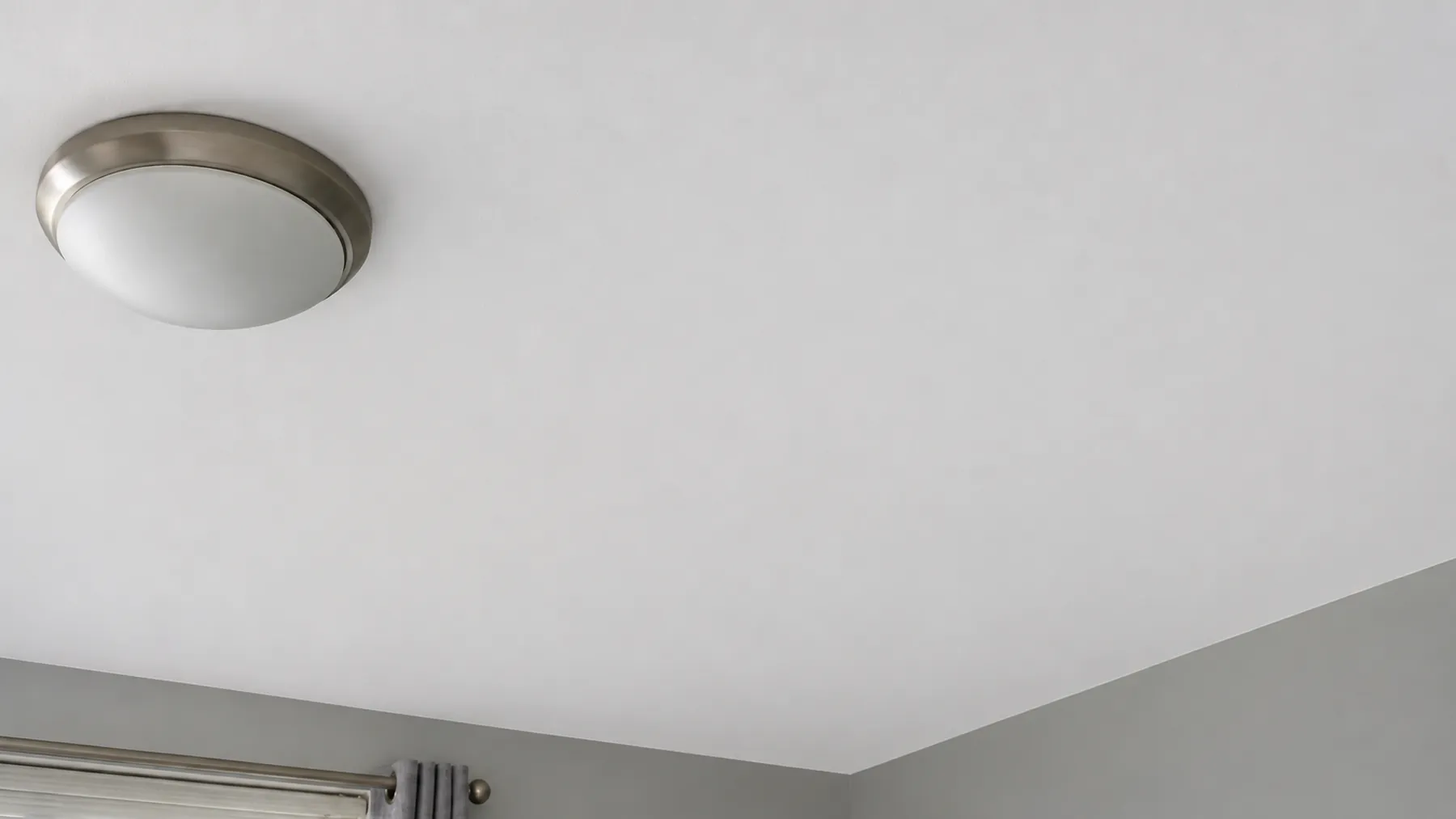
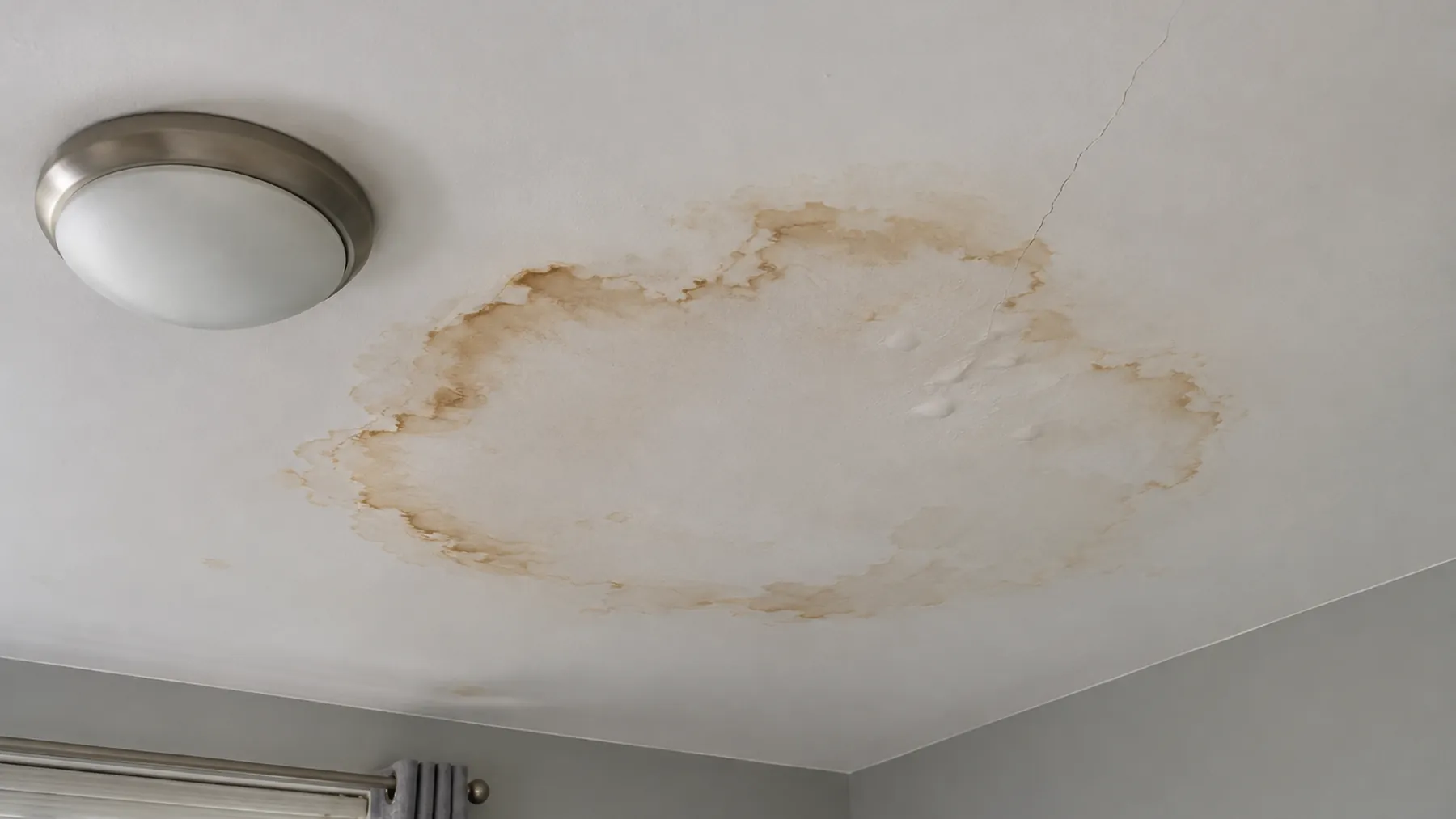
The leak is fixed first. Then the stain is sealed with a blocking primer, the crack is taped and the whole ceiling is repainted so no patch shows.
A photo-realistic render of a typical space, not a finished customer project.
What do you see on the ceiling?
Choose the closest match for the likely cause and the usual repair.
Three kinds of ceiling, three kinds of repair
What your ceiling is made of depends mostly on when the house was built.
| Ceiling | Where you find it | Typical problems | How it is repaired |
|---|---|---|---|
| Drywall | Most homes from the 1950s onward | Joint cracks, nail pops, water stains, sagging after a leak | Damaged board cut out and replaced, joints taped, finished in three coats, primed and painted. |
| Plaster on lath | Older homes in central Ottawa, mainly pre-1950 | Map cracking, loose or bulging areas, holes where plaster has fallen | Loose areas re-secured or removed and filled, cracks reinforced, then skim-coated for an even surface. |
| Textured | Common in homes from the 1960s to the 1980s | Stains, peeling texture, patches that do not match | Tested first in older homes, then patched and re-textured to blend, or the ceiling is taken smooth. |
Are you unsure which one you have? Tap the ceiling lightly. Drywall sounds hollow between the joists; plaster sounds dull and solid.
How a ceiling repair is carried out
Working overhead is slow and messy, so containment and sequence matter.
Find the cause
We ask about leaks, look above the damage where we have access, and check the moisture in the board. If a roofer or plumber is needed first, we say so.
Protect the room
We move or cover furniture and protect floors wall to wall. Ceiling work drops dust and debris straight down.
Remove what has failed
Soft drywall, loose plaster, lifted tape and flaking paint come out, back to material that is firmly attached.
Rebuild
We fix new drywall to the joists or to added backing. Then we tape and bed the joints.
Finish coats
Two or three thin coats of compound, each wider than the last, feather the repair into the surrounding ceiling.
Seal and prime
Stains get a stain-blocking primer. New compound gets drywall primer so it does not flash through the paint.
Match the texture
On a textured ceiling we recreate the pattern over the ceiling repair and blend it outward.
Paint the whole ceiling
We paint ceilings edge to edge in flat ceiling paint. Spot-painting a ceiling almost always shows, because the old paint has aged and the light hits it at a low angle.
Ceiling problems Ottawa homes get
Ice dams are a local speciality. After heavy snow, heat escaping through the roof melts the underside of the snowpack. The water runs down to the cold eaves and refreezes, building a ridge of ice that backs meltwater up under the shingles. Indoors it appears as a stain or a wet patch on an upstairs ceiling close to an outside wall, often in late winter. The cure is in the attic, with insulation, ventilation and air sealing; the ceiling repair comes after.
Attic condensation causes similar marks. Warm, moist air leaking up from the house meets the cold underside of the roof and forms frost. The frost melts in a thaw and drips onto the ceiling below. Bathroom fans that vent into the attic instead of outdoors are a frequent culprit.
In winter, some homes develop a crack along the top of interior walls. The roof trusses arch slightly in the cold and lift the ceiling at the middle of the house. The crack closes again in summer. The house is moving, not failing. So the fix is a flexible joint, not more filler.
You still find plaster ceilings in many older houses. The Glebe, Old Ottawa South, Sandy Hill and New Edinburgh have plenty of them. They are heavy, hard and good at blocking sound, and worth keeping when they are sound. The risk with age is the plaster losing its hold on the lath. That shows as a bulge or a ceiling that moves when pressed.
Textured ceilings and joint compound from before 1990 can have asbestos in them. Builders often used it until then. That comes from Health Canada. In a house of that age we sample the material and have it lab-tested before anyone cuts, scrapes or sands it. If you would prefer the texture gone altogether, see popcorn ceiling removal in Ottawa.
Ceilings, room by room
Where the ceiling is tells you a good deal about what went wrong.
After the repair: making it disappear
Why the whole ceiling gets painted
A ceiling is one large, flat, evenly lit surface, viewed at a shallow angle. That is the hardest possible place to hide a touch-up. Even with the same can of paint, a patch dries to a slightly different sheen from paint that has aged for years. Painting the ceiling wall to wall in a dead-flat finish removes any edge for the eye to catch.
Stain blockers are not optional
Water stains, smoke and nicotine are soluble in water-based paint. Roll ordinary ceiling paint over them and they dissolve into the wet film and reappear as it dries. A solvent- or shellac-based stain blocker seals them permanently. It has a strong smell while wet, so we ventilate the room, and it dries quickly.
Bathroom ceilings
A bathroom ceiling that peels will peel again unless the moisture is dealt with. After the repair it gets a moisture-resistant paint. We will tell you plainly if the fan is undersized or not venting outdoors, since the fan is what protects the finish.
Part of a bigger job
Ceiling repairs are often discovered at the start of a repaint. We do them first, along with any wall repairs under drywall repair in Ottawa. Then we paint the room top to bottom as interior painting in Ottawa.
Questions people ask
Good to know first.
Can you paint over a water stain?
Ordinary paint will not cover it, because the stain bleeds back through. Once the leak is fixed and the board is dry and solid, we seal the stain with a stain-blocking primer. Then we repaint the whole ceiling.
How do I know if water-damaged drywall needs replacing?
Press it gently. If it is hard and flat, it can usually be sealed and painted. If it is soft, swollen, crumbly, sagging or shows mould, it should be cut out and replaced.
Why does the crack between my ceiling and wall come back every winter?
The roof framing moves a little as the weather changes, and it lifts the ceiling. A rigid repair cracks again each year. The fix is a joint that can move, or a moulding that hides it.
Is a sagging ceiling dangerous?
Yes, a sagging ceiling can be dangerous. Wet drywall and loose plaster are heavy and can fall. Keep the area clear and have it inspected promptly.
Do you repair plaster ceilings?
Yes, we do. Sound plaster is worth keeping. We reinforce cracks, re-secure or replace loose areas, and skim-coat the ceiling so old and new read as one surface.
Can you match my textured ceiling?
Light stipple and knockdown textures can usually be matched closely. Heavy sprayed texture is harder to blend invisibly. In homes built before 1990, we send the texture to a lab before we disturb it.
Do I need to fix the leak before calling you?
The leak must be fixed before the ceiling repair, but call anyway. We can tell you what the damage suggests and which trade to bring in.
How long does a ceiling repair take?
We can seal a stain on sound board and repaint the ceiling in a day or two. Replacing damaged drywall takes longer, usually three or four visits. Each coat of compound has to dry before the next and before priming.
Can you repair part of a textured ceiling?
Yes, we can for light textures. We re-texture the patch and paint the whole ceiling so old and new blend. With heavy sprayed texture a perfect match is harder, and smoothing the entire ceiling is sometimes the tidier result.
Why is there mould on my bathroom ceiling?
Mould grows because warm, wet air is meeting a cold surface and staying there. We clean off and treat the growth, seal the ceiling and paint it with a moisture-resistant finish. We also check the fan. Without better ventilation it will come back.
Will you repaint the ceiling after the repair?
Yes, we do. Priming and repainting the full ceiling is part of every ceiling repair. A patch that is left unpainted, or painted on its own, will always show.
More from The Ottawa Painter
See a room get prepped and painted step by step, and try the colour tools, on the main page for painters in Ottawa. Or go straight to another service or area.
Start with a conversation
Tell us about the job
613-851-7831The estimate is free. Call for the quickest answer, or send the form and you will get a call back to talk through the rooms, the surfaces and the timing.