Test · Remove · Skim · Paint
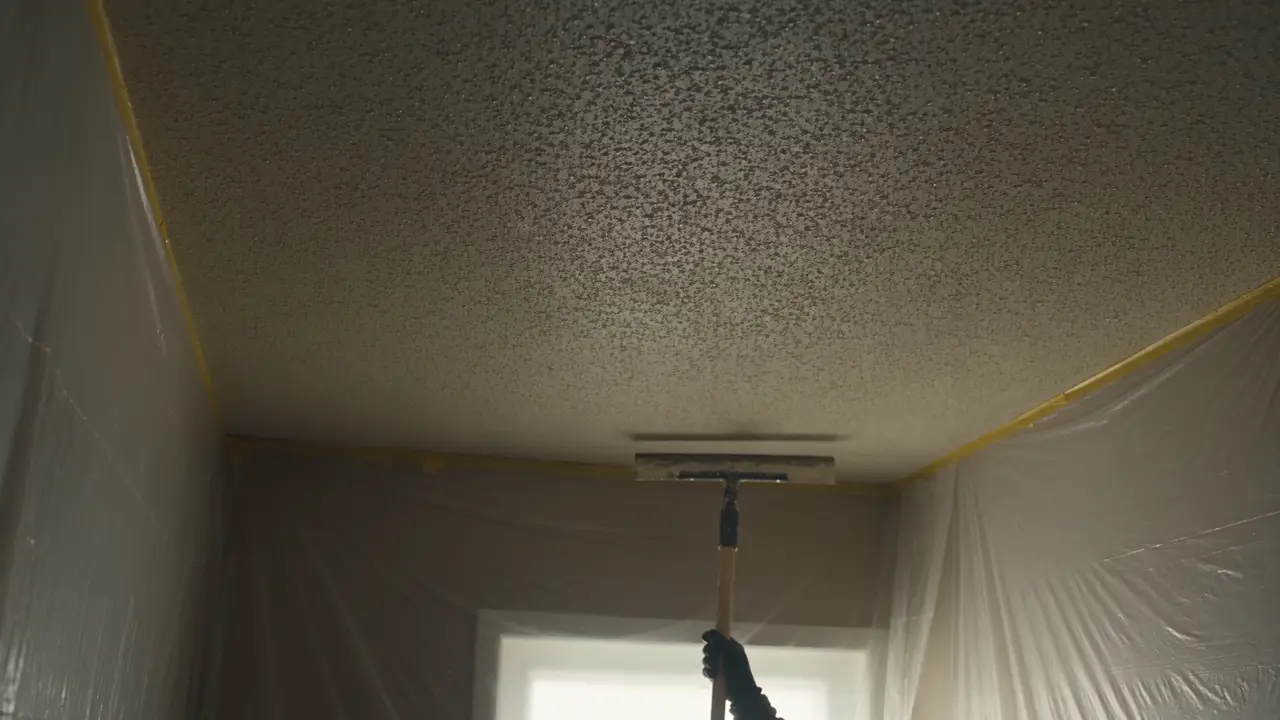
Popcorn ceiling removal in Ottawa, tested first.
Nothing dates a room like a stippled ceiling, and nothing changes it like a smooth one. We have the texture tested, then take it down or cover it. We skim the ceiling flat and paint it, with the room sealed while we work.
12 years of experience. Free estimate on every job. One crew for the repairs and the paint.
- First step, always
- A lab test in homes built before 1990
- Two routes
- Scrape and skim, or cover with new board
- Finish
- Skim-coated, primed, two coats of flat
- Next step
- Tell us the year the house was built
Why the test comes first
Builders sprayed this texture on thousands of Ottawa ceilings from the 1960s to the 1980s. People call it popcorn, stipple or stucco, so some ask us for stucco ceiling removal. It hid imperfect drywall work and it was fast. Some of it had asbestos in it. So asbestos testing comes before any scraping.
What Health Canada says
Builders often used asbestos before 1990, in products such as ceiling tiles and plaster. That comes from Health Canada. Sprayed texture from that period is one of the materials where it turns up. You cannot tell by looking: texture with asbestos and texture without it look exactly the same.
Left alone and in good condition, the ceiling is not considered a hazard. The risk comes from disturbing it. Scraping, sanding or drilling breaks the ceiling material up and can release fibres into the air of the house.
How the test works
We take small samples of the texture and seal them. Then we send them to an accredited lab. Results usually come back within a few days. If your home was built after 1990 and still has its original ceilings, you can usually skip the test. Any ceiling that might have been textured earlier, or with older stock, is still worth checking.
We do not scrape the popcorn off a pre-1990 ceiling on the strength of a guess. Be wary of anyone who offers to. Testing protects your family, the people doing the work and the next owner of the house.
If the result is positive
A positive result does not mean you are stuck with the ceiling. Ontario has rules for how this material comes out. You hire an asbestos removal crew for that part. Painters like us should not touch it. Once the material is gone and the area is cleared, we take over: repairing, skimming and painting the ceiling.
A second route avoids removal altogether: covering the ceiling, which is described below.
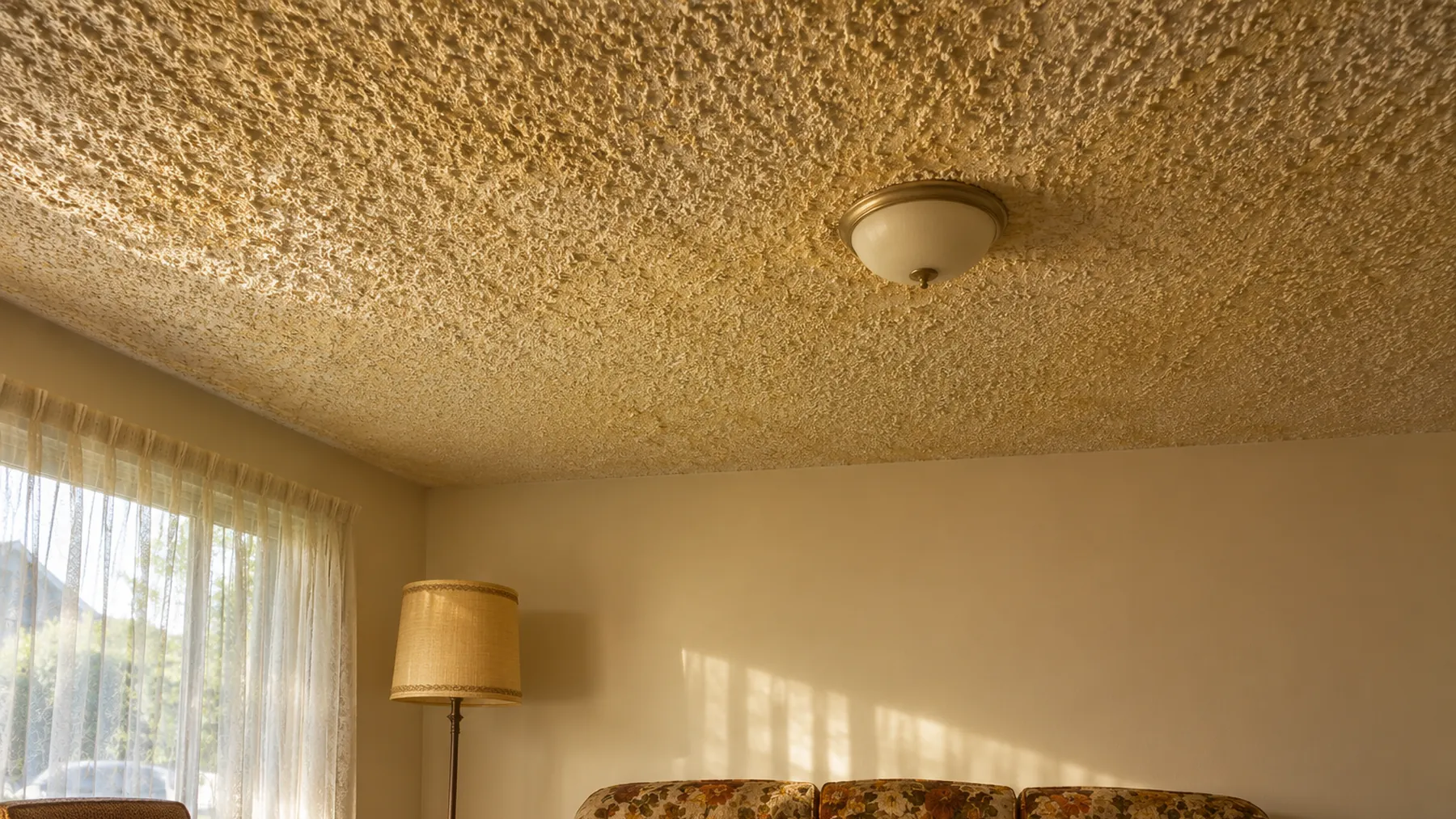
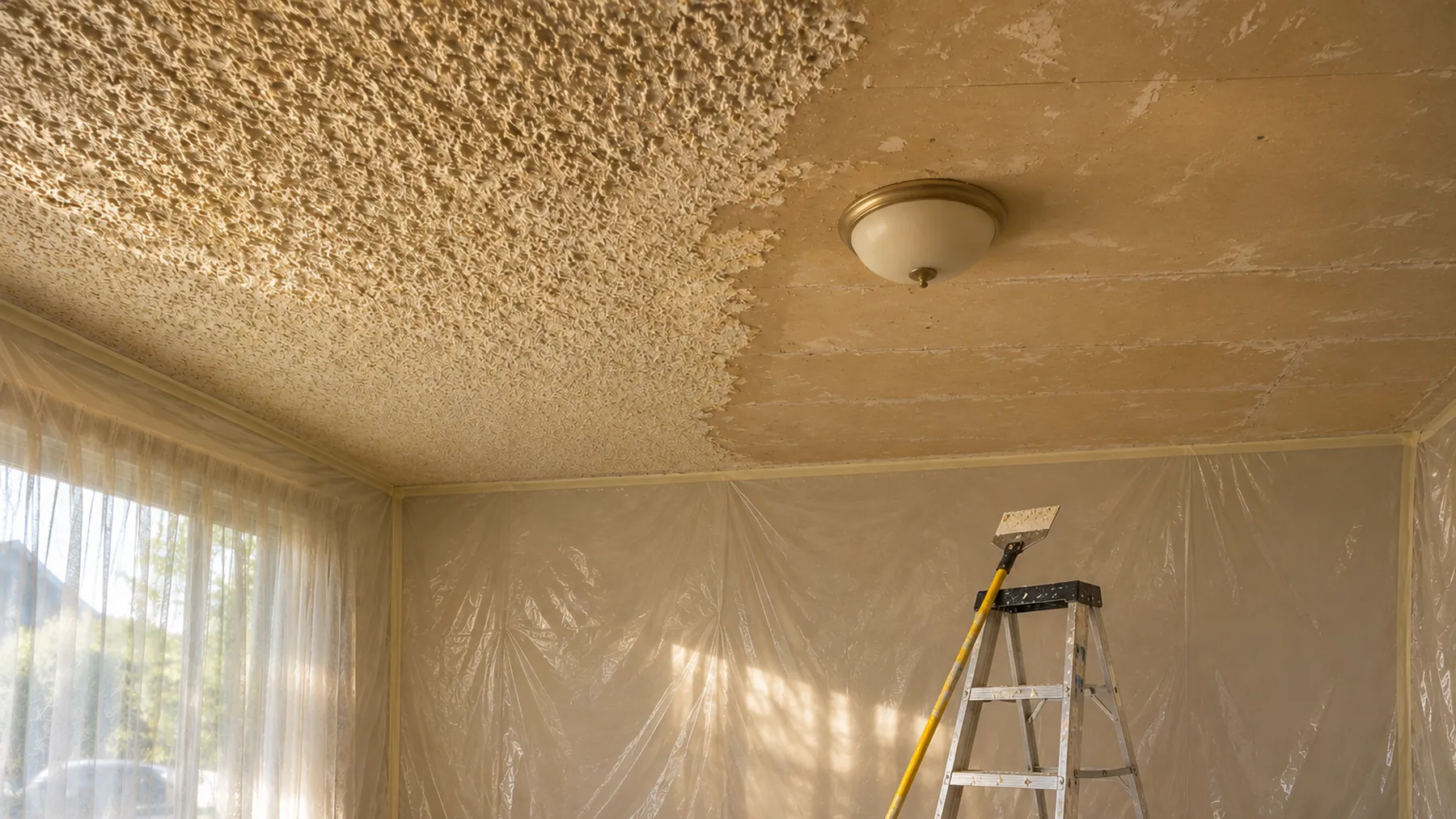
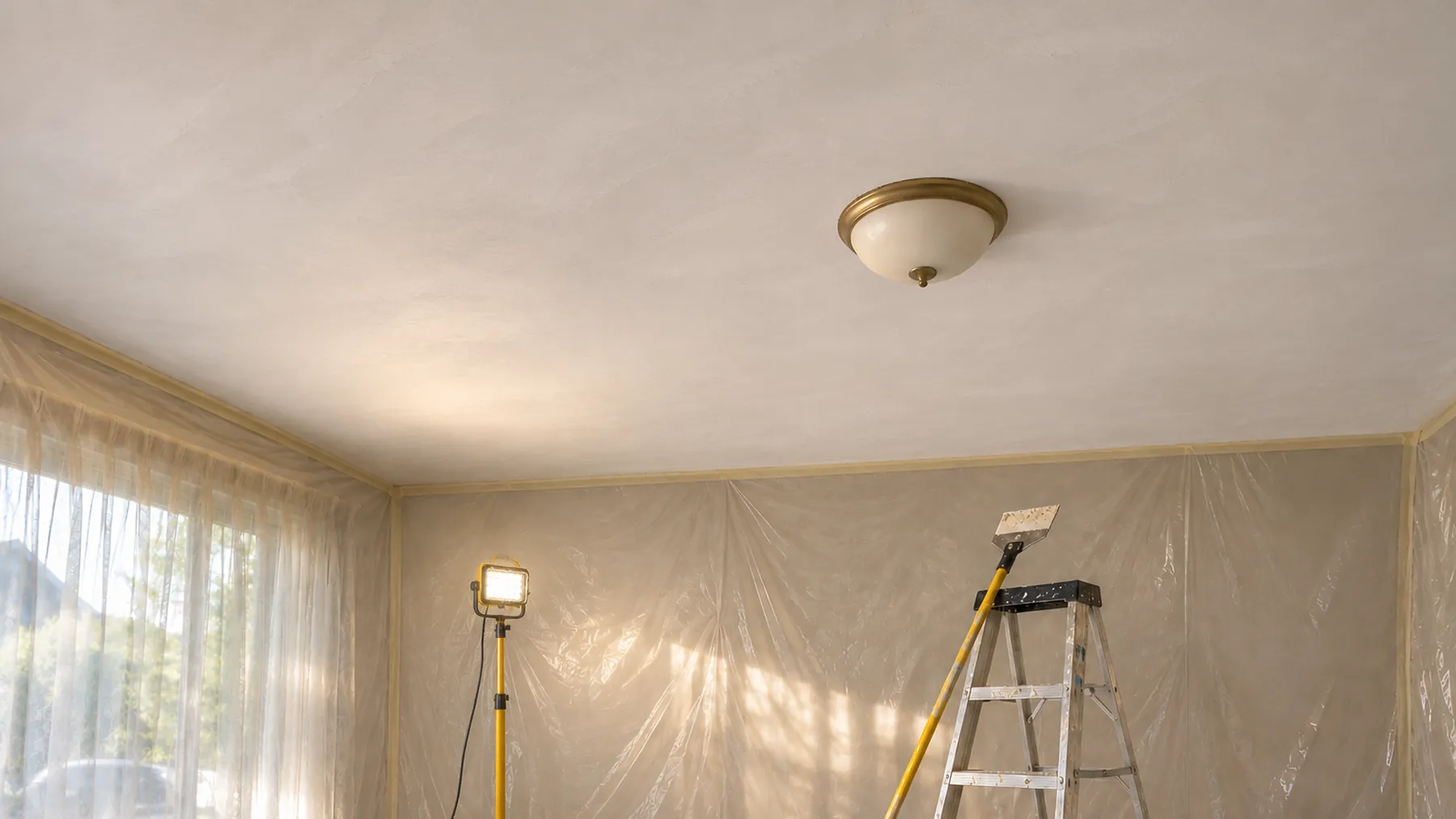
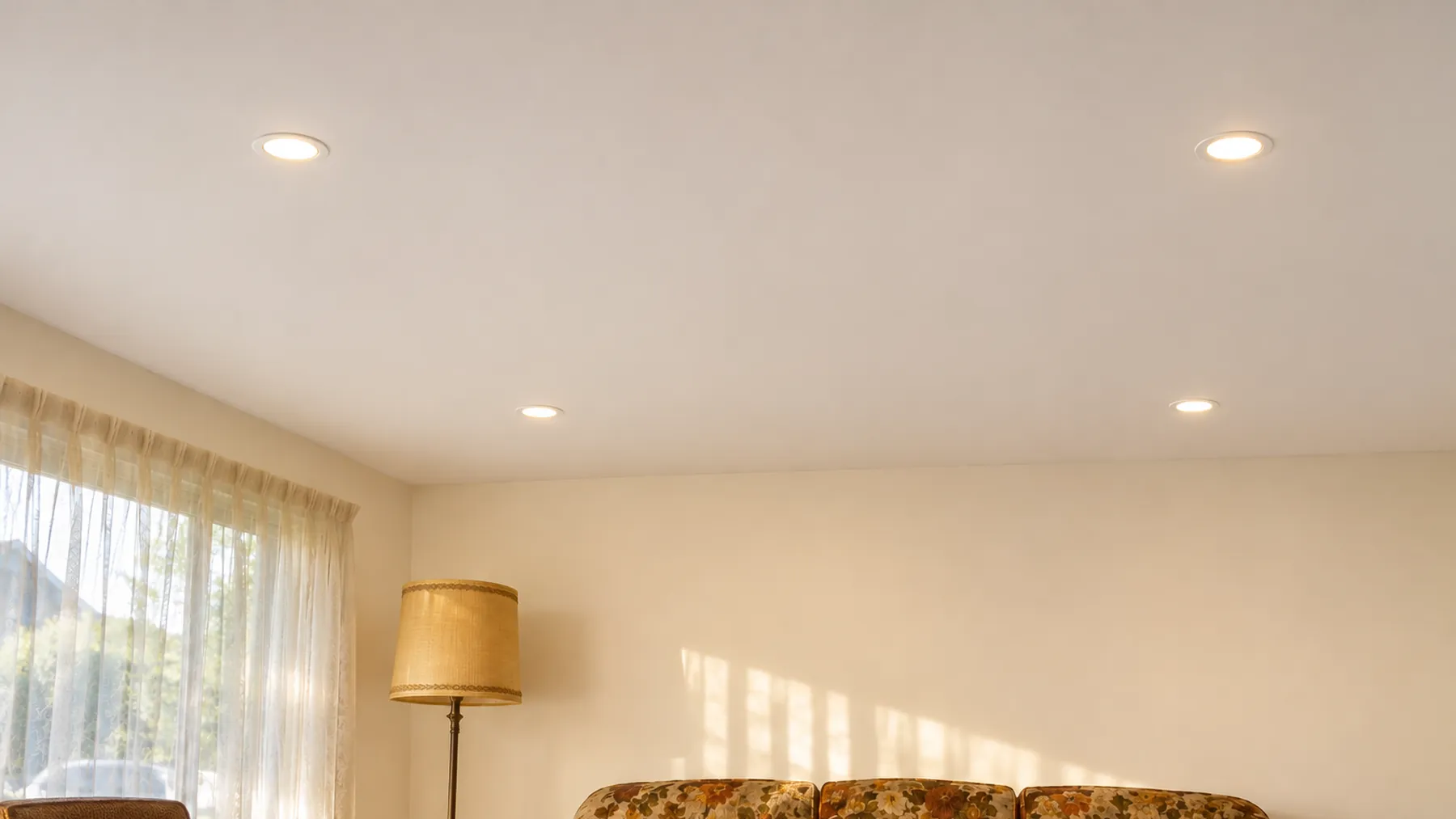
A ceiling, start to finish
From stipple to smooth.
Test first
Before anything is scraped, samples go to a lab. The result decides how the ceiling comes down and who does it.
Seal and scrape
The room is sealed in plastic, the texture is dampened and it comes off in long, soft ribbons.
Skim and sand
The board behind is never flat enough to paint. It gets skimmed wall to wall and sanded under a raking light.
Prime and paint
Primer, then two coats of flat white. Side light from the window now finds nothing to catch on.
Photo-realistic renders.
Three ways to a smooth ceiling
Which one suits your house depends on the test result, whether the texture has been painted, and the state of the drywall underneath.
| Method | How it works | Best when | Watch for |
|---|---|---|---|
| Scrape and skim | We dampen the texture and scrape it off. Then we repair the ceiling, skim-coat it in two or three passes, sand, prime and paint. | The test is negative and the texture has never been painted, so it softens with water. | The drywall underneath was often finished roughly, because it was always going to be hidden. Expect real skim work. |
| Skim over | We remove loose material, apply a bonding primer, then fill and skim the ceiling flat over the remaining texture. | The texture is light or already painted and firmly attached, and the test is negative. | Adds weight to the ceiling, so the existing material must be sound. |
| Cover with new drywall | We screw new drywall through the old ceiling into the joists, then tape, finish and paint it. | Heavily painted texture that will not scrape, damaged ceilings, or where leaving the old material undisturbed is preferred. | Lowers the ceiling slightly; light fixtures, vents and crown need adjusting. |
Covering an asbestos-containing ceiling still involves fastening through it. We plan that work with the test result in hand and in line with Ontario's rules.
What is your ceiling like?
Pick the closest description to see the likely route.
How the work is carried out
Ceiling work is the messiest job in a house when it is done carelessly. Done properly, the mess stays inside plastic. Here is our removal process, step by step.
Test and plan
Samples go to the lab. With the result back, we confirm the method room by room and book the work.
Empty and seal the room
Furniture comes out or is wrapped. We cover floors edge to edge and drape the walls in plastic sheeting. We seal doorways and cover vents so dust and water stay in the room.
Power off, fixtures down
We safely disconnect ceiling lights, fans and smoke alarms in the work area, then take them down or protect them.
Remove or cover
We wet and scrape the texture, bond and skim it, or cover the ceiling with new board, according to the plan.
Repair the board
We tape and fill joints, screw heads, gouges and old patches. This stage decides how flat the final ceiling looks.
Skim coat
We trowel two or three thin skim coats of compound over the whole ceiling. We sand the ceiling between coats and check it with a light held flat against the surface.
Prime and paint
A drywall primer seals the new surface, followed by two coats of dead-flat ceiling paint. Flat paint is used because ceilings catch light at a low angle.
Clean down
We roll the plastic inward and remove it, vacuum the floors and put the fixtures back. The room is returned to you ready to use.
Before and after
From stipple to smooth.
The texture is tested, taken down, and the board behind it is skimmed until side light shows nothing. The room looks taller for it.
A photo-realistic render of a typical space, not a finished customer project.
What a smooth ceiling does for a room
More light, cleaner lines
Texture scatters light and holds shadow, which makes a ceiling look greyer and lower than it is. A flat ceiling reflects light evenly across the room, so the space feels brighter and taller. It also gives a crisp, straight line where the wall colour meets the ceiling, which is almost impossible to cut cleanly against stipple.
Easier to live with
Popcorn texture traps dust and cobwebs, cannot be wiped, and sheds when brushed. Water stains on it are hard to hide and patches are hard to blend. A smooth, painted ceiling can be dusted, touched up and repainted like any other surface.
The right time to do it
Ceiling work is far easier before the walls and floors are finished. If you are planning to repaint, replace flooring or renovate, do the ceilings first. Many people combine it with a full repaint, in which case the walls are done straight after under interior painting in Ottawa. The same visit suits moving or adding pot lights, since we refinish the ceiling anyway.
Where the hidden work is
People are often surprised that removing popcorn is the quick part. Builders who knew a ceiling would be sprayed did not finish the joints carefully. Once the texture is gone, the seams, screw heads and tool marks are all exposed. Bringing that surface to a smooth finish, flat enough to stand up to daylight from a window, is skilled trowel work. Any wall or ceiling damage found along the way is handled under drywall repair in Ottawa.
Questions to settle before the job is booked
A little planning before we hang the plastic saves time and avoids surprises once the ceiling is bare.
Lighting and wiring
With the ceiling stripped and about to be refinished, this is the cheapest moment to change what is on it. An electrician can swap old surface-mounted fixtures for pot lights, add a fan or move a fixture to the centre of the room. That wiring is an electrician's job. It happens after the texture comes off and before the skim coats, so the patches vanish under the new finish.
Insulation above
On a top floor the ceiling is the boundary between the house and the attic. If we find the board stained or loose, it often points to a problem above, such as missing insulation or an old leak. Learning that now beats learning it after the ceiling has fresh paint.
How smooth is smooth
A standard finish is flat and even under normal room light. Large windows that throw light across the ceiling call for more, and so does a paint with any sheen. In those rooms, ask for a full skim to the highest finish level. It takes an extra pass and is worth the effort. Cracks or holes found in the ceiling along the way are fixed as a ceiling repair in Ottawa.
Popcorn ceilings in Ottawa neighbourhoods
Textured ceilings follow the building booms. They are common in the bungalows, split-levels and townhouses built from the 1960s through the 1980s. You find them across Nepean, Gloucester, Alta Vista, and the older parts of Kanata and Orleans. Many condominium towers of the same period have them too.
In condominiums the ceiling is often textured concrete, not drywall. The method differs. Your building may have its own rules, and the corporation may need to approve the work. Check your declaration or ask the property manager before planning.
Homes from the 1990s and 2000s in Barrhaven, Stittsville and newer Kanata sometimes have a lighter stipple or knockdown texture. That texture rarely contains asbestos and usually comes off more easily. Paint on it changes the method.
Questions people ask
Good to know first.
Does my popcorn ceiling contain asbestos?
It might if it was applied before 1990. Nobody can tell by looking. Asbestos testing by a laboratory on a small sample gives a definite answer, usually within a few days.
Is it dangerous to leave a popcorn ceiling in place?
Intact and undisturbed, it is generally not considered a hazard. The trouble starts when someone scrapes, sands or drills it, or when the ceiling crumbles. If yours is flaking, have it tested and avoid sweeping or vacuuming the debris.
Can I paint over the texture?
Yes, if it is sound. Texture soaks up plenty of paint. Spray it or roll it gently with a thick-nap roller, because unpainted texture can loosen when it gets wet. Painting it does make later removal harder.
How long does removal take?
A single room is typically a few days from sealing the room to the final coat, most of it drying time between skim coats. A whole floor takes longer and is usually done in sections so you can stay in the house.
How messy is the work?
The work is messy inside the sealed room and should not be outside it. We seal floors, walls, vents and doorways with plastic before work starts, and wet scraping keeps dust down.
Do I have to move out?
Most people stay home. We close off the rooms being worked on, and the rest of the house stays usable. If your ceiling needs abatement, that crew will tell you what to expect.
What if the ceiling was painted?
Painted texture resists water, so scraping is slower. Depending on how it responds, we either work it off, skim over it, or cover it with new drywall. A small test patch decides.
Can you remove the texture in a condo?
We often can, but check first. Many condo ceilings are texture sprayed directly onto concrete, which comes off differently from texture on drywall. The corporation may also have rules about the work and the hours. Ask your property manager, then send us what they say.
Is covering the ceiling with new drywall as good as removing the texture?
It gives the same smooth result and is sometimes the better route. It suits heavily painted texture that will not scrape and ceilings with widespread damage. It also suits owners who prefer the old material left undisturbed. The ceiling ends up about a centimetre lower, and we adjust fixtures and vents to suit.
Can I remove a popcorn ceiling myself?
Some owners of newer homes do, but we suggest you hire a professional. A crew that can professionally remove texture also knows how to finish what sits under it. Scraping overhead is slow, and a slip of the blade can damage the drywall paper. Any ceiling from before 1990 needs a lab test before anyone touches it.
What do popcorn ceiling removal costs depend on?
We do not publish prices, because every ceiling is different. The ceiling removal cost for your home depends on four things. They are the lab result, the room size, any paint on the texture and the repair needed underneath. After a look at the room, we give you a written scope.
Will you repaint the ceiling when it is smooth?
Yes. Primer and two coats of flat ceiling paint are part of the job. A bare skim-coated ceiling is not finished until it is sealed and painted.
More from The Ottawa Painter
See a room get prepped and painted step by step, and try the colour tools, on the main page for painters in Ottawa. Or go straight to another service or area.
Start with a conversation
Tell us about the job
613-851-7831The estimate is free. Call for the quickest answer, or send the form and you will get a call back to talk through the rooms, the surfaces and the timing.