Kitchens · Bathrooms · Built-ins
Cabinet painting in Ottawa with a finish like new doors.
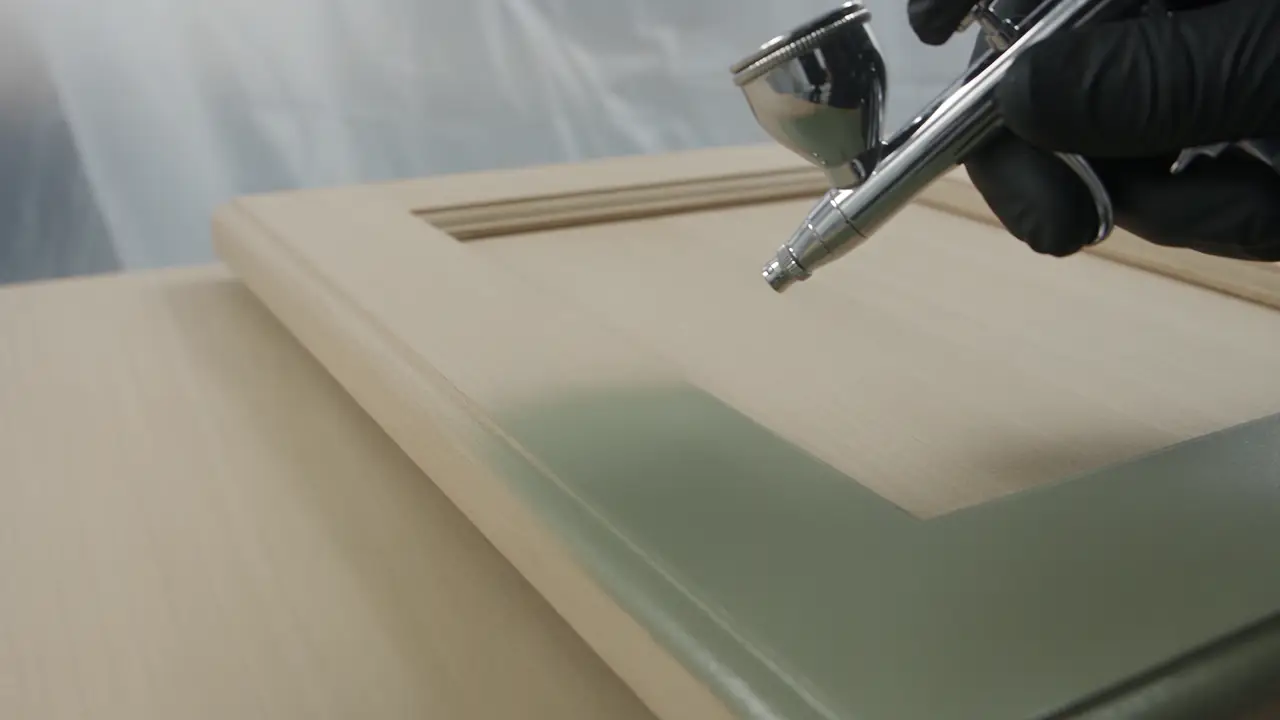
If the boxes are solid and the layout works, a kitchen does not need replacing. It needs refinishing properly. Our cabinet painters take the doors off, remove the grease and apply a bonding primer. Then they spray an enamel that cures hard enough for daily life.
12 years of experience. Free estimate on every job. One crew for the repairs and the paint.
- What we refinish
- Kitchen and bathroom cabinets, islands, built-ins
- How
- Doors and drawers removed and sprayed
- Works on
- Solid wood, veneer, MDF and most laminates
- Next step
- Send photos or book a look
Why cabinets are not painted like walls
Kitchen cabinet painting has a poor reputation in some circles, and one mistake earns it: wall paint brushed over greasy doors. Done as a refinishing process, with the right products, a paint job on cabinets is hard to tell from a factory finish.
Kitchens are greasy, even clean ones
Cooking puts a thin film of oil on every surface, heaviest on the doors beside the stove and around the handles where hands touch. Paint does not bond to grease. We wash every door, drawer front and frame with a degreaser and rinse it before anything else happens. Skipping this step is the single most common reason cabinet paint peels.
The old finish must be keyed
Factory cabinets are sealed with a hard, slick lacquer or conversion varnish. That coating is designed to resist exactly what we are about to do, which is stick something to it. We sand the surface to dull the sheen and give the primer a tooth. Then we vacuum and wipe it so no dust is trapped in the finish.
Primer does the gripping
A bonding primer is what holds the whole system to the old finish. On oak, maple and cherry it also blocks the tannins in the wood from bleeding through and yellowing a white finish. We put on one or two coats and sand lightly between them. The surface is then smooth and even before we add any colour.
The top coat is an enamel, and it cures
Cabinet enamels level out as they dry, so they leave no brush marks. They also cure into a film far harder than wall paint. That cure takes time: the doors feel dry within hours and can be rehung in days, but the finish keeps hardening for several weeks. We explain how to treat the kitchen gently during that period, because early knocks are when most damage happens.
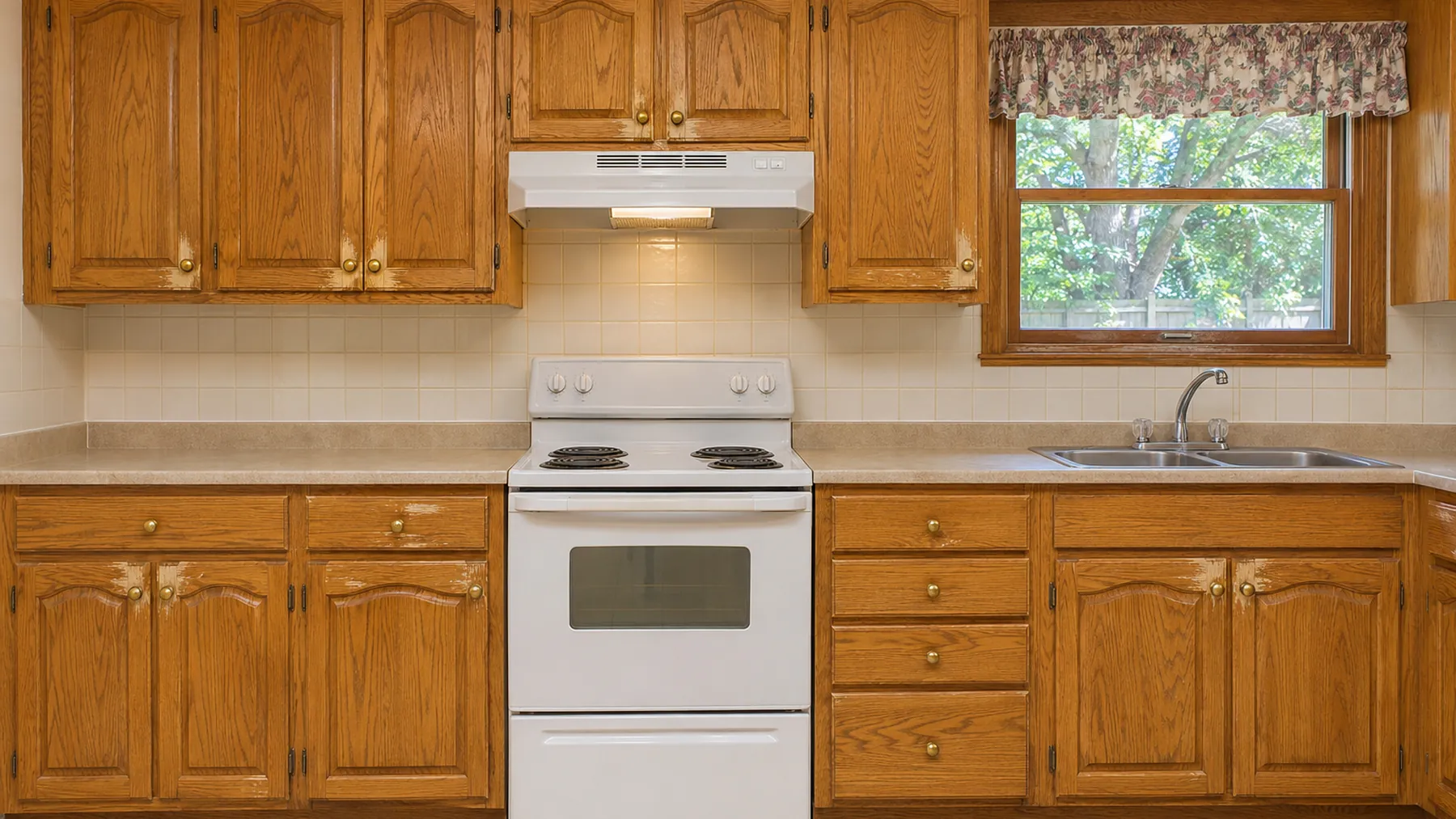
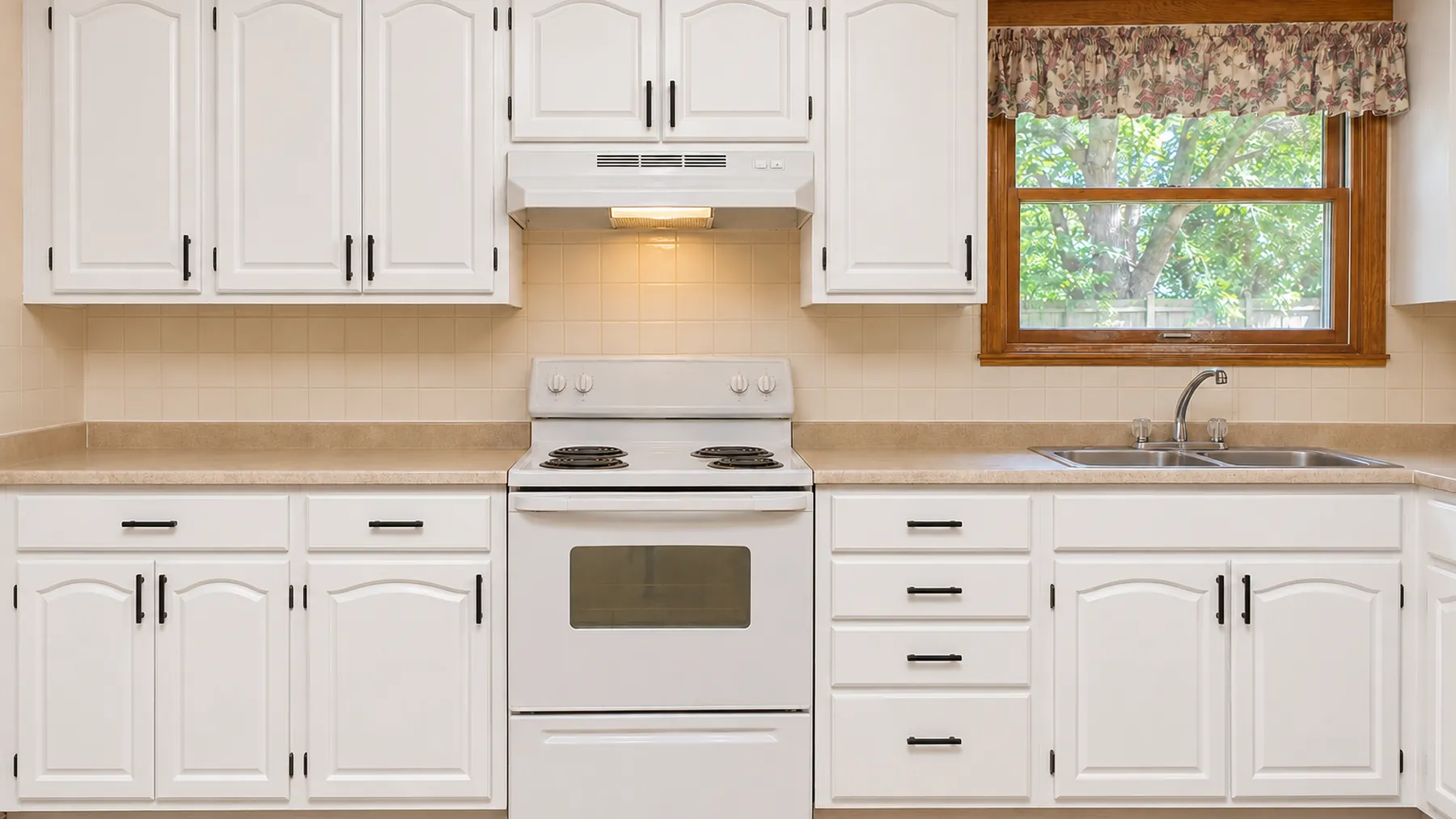
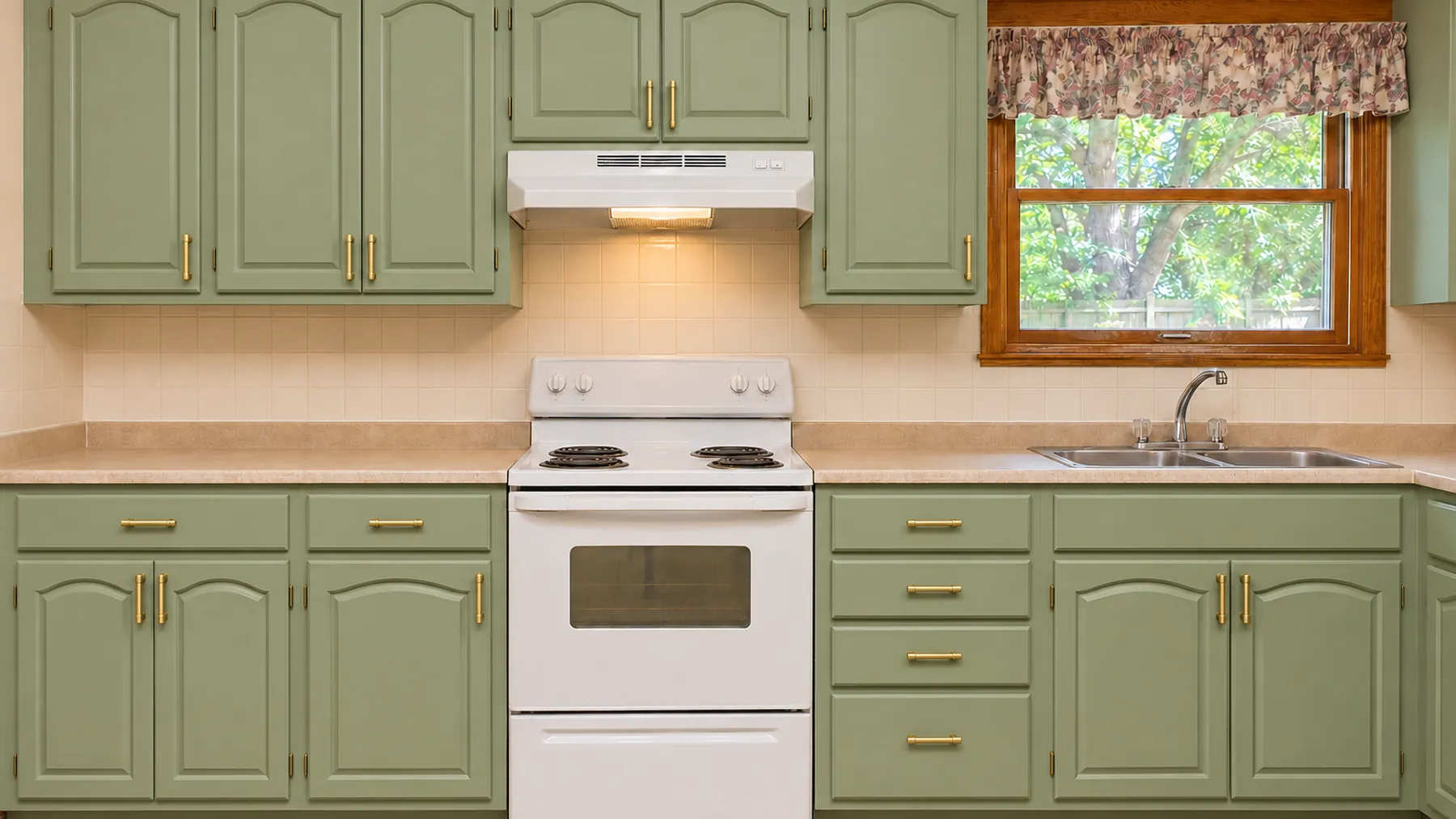
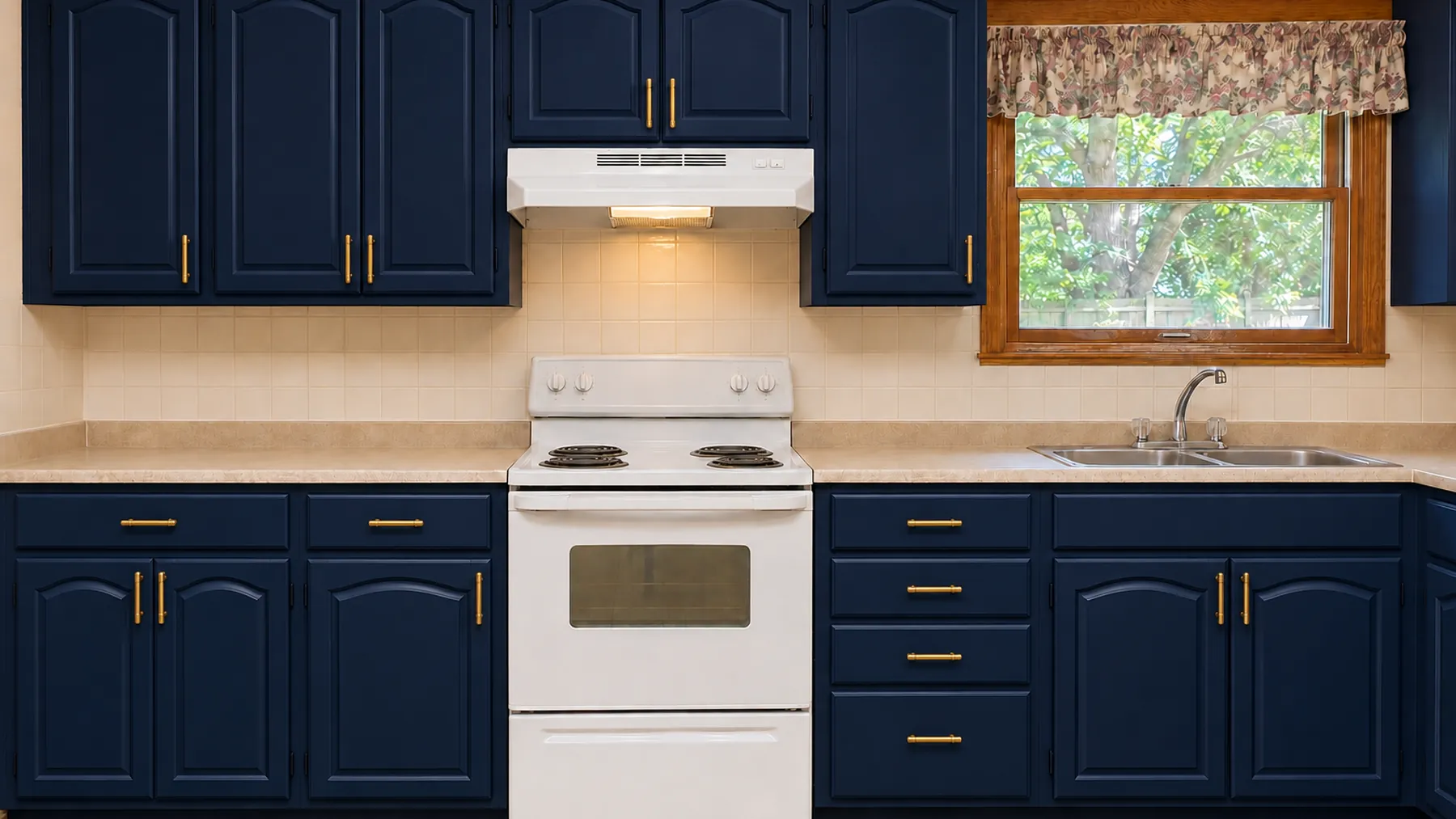
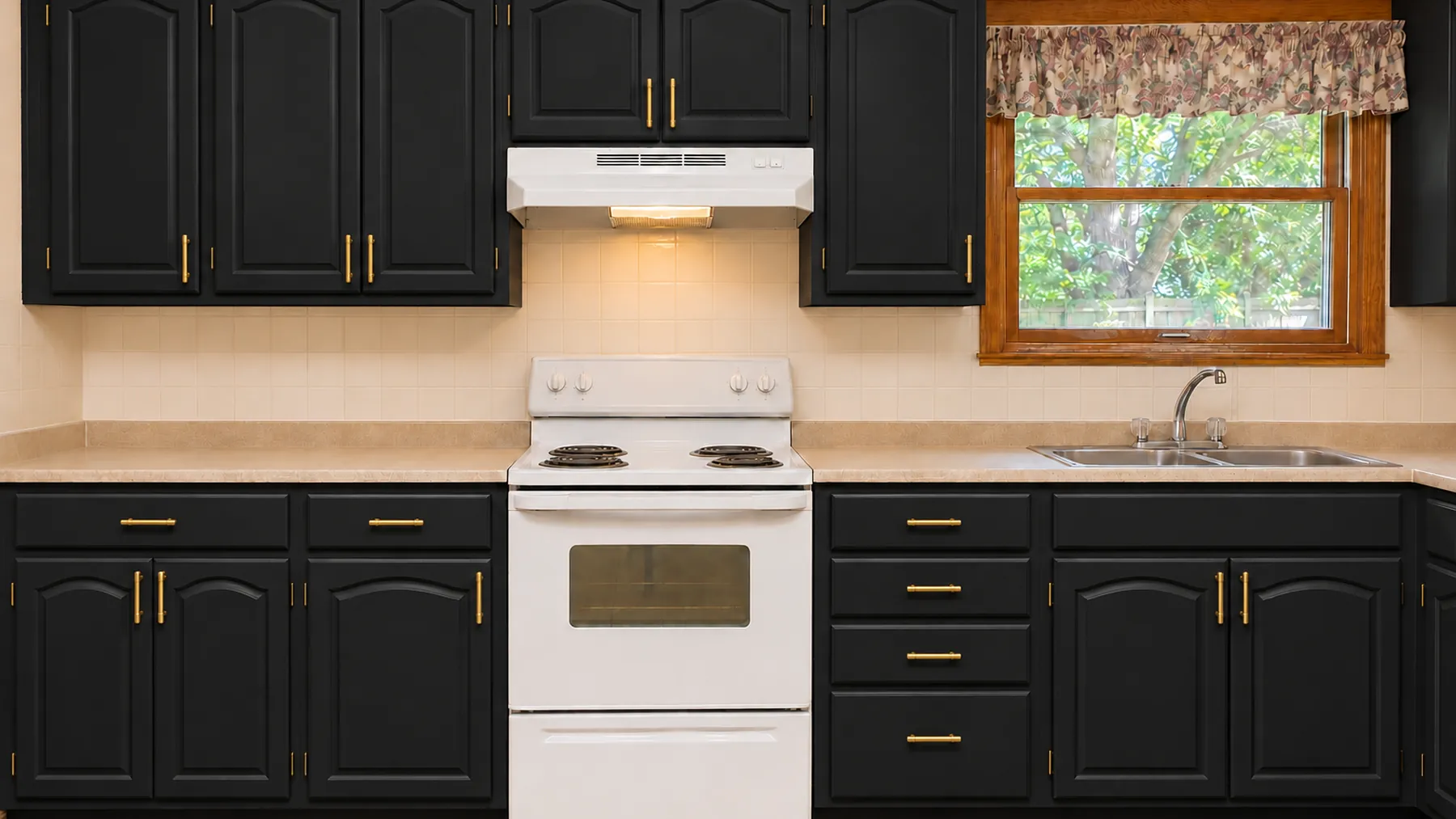
Same kitchen · four finishes
Pick your cabinets.
Finish 01 of 05
Golden oak
Solid boxes, sound doors, a finish that has gone orange. Cabinets like these are the best candidates for refinishing.
- The catch
- Oak grain shows through paint unless it is filled first
- Next step
- A look at the doors: solid wood, veneer, or peeling thermofoil
Finish 02 of 05
Satin white
The most asked-for change. White bounces light around a dark kitchen and makes old counters look newer than they are.
- Best for
- Small or dim kitchens
Finish 03 of 05
Sage green
Colour without shouting. Sage sits well with wood floors, cream tile and brass or black hardware.
- Best for
- Kitchens with warm floors or counters
Finish 04 of 05
Deep navy
Dark, rich and formal. Navy makes brass hardware glow, and it needs a flawless sprayed finish because dark colours show every ripple.
- Best for
- Kitchens with plenty of daylight
Finish 05 of 05
Soft black
The boldest choice. It turns a dated kitchen into a statement, and it asks for regular wiping around the handles.
- Best for
- Large, bright kitchens and islands
One kitchen, four colours. Photo-realistic renders for comparison, not finished customer projects. Ratings compare the four finishes with each other.
The refinishing process, step by step
A typical kitchen takes about a week from the first day to the doors going back on, most of it drying and curing time.
Label and remove
We number every door and drawer front and record its position. Then we remove it along with hinges, handles and bumpers. We bag hardware by location so each piece returns to where it came from.
Mask the kitchen
We cover and tape off counters, floors, appliances, backsplash and the insides of the cabinets. The kitchen stays usable in the evenings for simple meals.
Degrease and sand
We wash, rinse, dry and sand frames, doors and drawer fronts. We fill dents and chips and plug old hardware holes if the handles are changing.
Prime
We apply a bonding, stain-blocking primer, leave it to dry and sand it smooth. We can grain-fill open-grained oak at this stage for a flat modern look instead of visible grain.
Spray the doors
We spray doors and drawer fronts flat, both faces and all edges, in a controlled space so dust does not settle in the finish. We spray two coats of enamel with drying time between.
Finish the frames
We finish the cabinet boxes, face frames, end panels and trim on site to match. We spray where the kitchen can be fully enclosed. Elsewhere we use fine rollers and brushes that leave a matching texture.
Cure, rehang, adjust
Once the doors have hardened enough to handle, we rehang them. We adjust the hinges so the gaps are even, then fit new bumpers and the handles.
What are your cabinets made of?
The material decides the primer, the prep and, occasionally, whether painting is the right call at all.
Refinish, reface or replace?
Three ways to change the look of a kitchen. They differ in disruption and in what they can fix.
| Option | What it is | Best when | Limits |
|---|---|---|---|
| Cabinet refinishing | The existing doors, drawers and frames are prepared and sprayed in a new colour. | The boxes are sound, the doors are in good shape and you like the layout. | Does not change the door style or fix damaged or water-swollen doors. |
| Refacing | New doors and drawer fronts are fitted and the frames are covered with matching veneer. | You want a different door style but the boxes and layout are fine. | A carpentry service, not painting. More involved than refinishing. |
| Replacement | Everything comes out and new cabinets are installed. | The layout does not work, the boxes are failing or you are renovating the whole room. | The longest disruption and the largest project of the three. |
We do the first of these. If your doors are too far gone to paint, we will say so before any work starts. We can also paint new doors to match existing frames.
Before and after
From orange oak to new doors.
The boxes and doors stay; the finish changes. Oak grain is filled, the doors are sprayed flat and the handles are swapped at the end.
A photo-realistic render of a typical space, not a finished customer project.
Colour, sheen and hardware
Choosing a cabinet colour
Cabinets are the largest block of colour in a kitchen. We choose their colour against what is staying: the countertop, the backsplash and the floor. Whites and off-whites are the most forgiving and the most requested. Deep greens, navy and charcoal work well on an island or lower cabinets with a lighter colour above. That split keeps the room from feeling heavy.
Order a sprayed sample door, or at least a large brushed sample. Look at it in the kitchen at night under your own lights. Whites in particular shift a great deal between daylight and warm bulbs.
Sheen
Satin is the usual choice: enough sheen to wipe clean easily, not so much that every fingerprint and surface ripple shows. Semi-gloss is tougher and shinier and suits the smoothest doors. Matte cabinet finishes exist and look beautiful, but they mark more readily around handles.
New hardware changes everything
Swapping handles is the cheapest part of a kitchen update and one of the most visible. If the new pulls have a different hole spacing, we fill and sand the old holes before priming so they vanish under the finish. We drill new holes with a jig once the doors are cured. Soft-close hinges and bumpers can be fitted at the same time.
The rest of the room
Fresh cabinets make tired walls and ceilings stand out. Many people have the kitchen walls, ceiling and trim done in the same visit. We add that work to the scope as interior painting in Ottawa. We deal with dents or old holes in the walls under drywall repair in Ottawa.
Is your kitchen a good candidate?
Refinishing gives the most for the least disruption when a few things are true. Run this quick check before you ask for a quote.
Why refinishing makes sense
A kitchen renovation is one way to change a kitchen. Refinishing is another.
When the layout already works
If you are happy with your existing kitchen layout, a full kitchen renovation throws out plenty of sound material. Refinishing keeps the existing cabinets and changes what you see. That makes it a cost effective route, with minimal disruption to your home.
What gets finished
We finish the cabinet doors and drawers, the frames and the visible sides of each cabinet box. Kitchen cabinet doors are sprayed off site, away from your home. Cabinet doors and drawer fronts carry most of the wear, so they get the hardest finish.
Latex, oil and enamel
Ordinary latex paint stays soft on cabinets and marks easily. Old oil based paint yellows with age and takes days to dry. Our paint is a high quality waterborne enamel made for cabinets. It cures hard and stays its colour.
The result
A sprayed finish refreshes your kitchen in about a week. Sampling one door first is a good idea, because colour shifts under kitchen light. The frequently asked questions below cover timing, colours and care for a newly refreshed kitchen.
Living with painted cabinets
A properly refinished kitchen is meant to be used. The finish stands up to normal cooking, cleaning and family life once it has cured. The finish is most vulnerable in the first few weeks. Close doors gently, avoid hanging damp towels over them and hold off on scrubbing.
Clean with a soft cloth and mild soapy water. Abrasive pads and harsh degreasers dull any painted finish over time. Wipe up water around the sink and dishwasher instead of letting it sit on the bottom edge of the doors. That edge is where every kitchen, painted or factory-finished, eventually shows wear.
Ottawa houses swing from humid summers to dry heated winters, and wood doors swell and shrink with that. A faint line at the joints of a five-piece door in February is normal seasonal movement. A humidifier that keeps the house from getting extremely dry is kind to cabinets, hardwood floors and trim alike.
Chips can happen, usually on the edge of a drawer that catches a pot. We leave you a small labelled jar of the finish for touch-ups, and a spot repair blends well on a satin enamel.
Questions people ask
Good to know first.
How long does it take to paint kitchen cabinets?
An average kitchen takes about a week, from removing the doors to rehanging them. Much of that is drying and curing time. The kitchen stays usable for light cooking in the evenings.
Will painted cabinets chip or peel?
Painted cabinets hold up when they are degreased, sanded, primed with a bonding primer and finished in a cabinet enamel. Peeling comes from skipped prep or the wrong paint. Like any finish, edges can chip under a hard knock, and those are easy to touch up.
Do you spray or brush?
We spray doors and drawer fronts, which gives the smooth, even surface people expect. We spray frames where the room can be enclosed, or finish them by hand with tools that leave a matching finish.
Can you paint oak cabinets without the grain showing?
Yes, we can. We fill the grain before priming, then sand it flat. Without filling, oak grain remains visible as texture under the paint, which some people prefer.
Can laminate or thermofoil cabinets be painted?
Laminate and melamine can be painted with the right bonding primer. Thermofoil can only be painted if the vinyl skin is firmly attached everywhere. Peeling thermofoil must be removed, or the doors replaced.
Is painting cheaper than new cabinets?
Refinishing reuses everything you already have, so it is a much smaller project than replacement and far less disruptive. It makes sense when the boxes are solid and the layout works. We do not publish prices here; ask for a quote for your kitchen.
Can I change the handles at the same time?
Yes, you can, as long as you tell us before we start. We fill the old holes and hide them under the finish, then drill new ones accurately after the doors have cured.
Can I stay in the house while the cabinets are being done?
Yes, you can stay. The doors and drawer fronts are away for most of the week, so you live with open shelves. We finish the frames on site over a day or two. The kitchen is masked off during working hours and available again in the evening.
What colours are people choosing?
Soft whites and warm off-whites remain the most common. Muted greens, deep blues and charcoal follow, often on an island or the lower cabinets only. The right answer depends on your counters, floor and light, which is why a sample door in your own kitchen is worth the wait.
Could old cabinets have lead paint on them?
They could, in a kitchen that dates from before 1960 and has been repainted over the years. Homes of that age probably have lead-based paint in them. That comes from Health Canada. So we test old coatings before any sanding.
Do you paint bathroom vanities and built-ins?
Yes, we do. We refinish vanities, laundry cabinets, mudroom lockers, bookcases and fireplace built-ins the same way.
More from The Ottawa Painter
See a room get prepped and painted step by step, and try the colour tools, on the main page for painters in Ottawa. Or go straight to another service or area.
Start with a conversation
Tell us about the job
613-851-7831The estimate is free. Call for the quickest answer, or send the form and you will get a call back to talk through the rooms, the surfaces and the timing.